Research Article | | Peer-Reviewed

Determination of Monod Kinetic Parameters for Petroleum Hydrocarbon, Heavy Metals and BTEX Co-Contaminated Groundwater During Biosparging

Received: 12 October 2026     Accepted: 22 October 2026     Published: 11 November 2026
Views:       Downloads:
Abstract

This study investigated the determination of kinetic parameters for the treatment of groundwater co-contaminated with total petroleum hydrocarbons (TPH), polycyclic aromatic hydrocarbons (PAHs), heavy metals, and benzene, toluene, ethylbenzene, and xylenes (BTEX) using laboratory-scale biosparging. The experimental setup consisted of five bioreactors designed for pH adjustment, heavy-metal treatment, PAH removal, TPH removal, and BTEX treatment. Contaminant concentrations were monitored over 15 days, and the specific reaction rates and reciprocal concentration relationships were evaluated using linearized Michaelis-Menten kinetics. The results showed that TPH concentration decreased from 0.870 to 0.269 mg/L, corresponding to 69.08% removal, while PAH concentration decreased from 2.780 to 1.449 mg/L, representing 47.88% removal. For BTEX, benzene, toluene, ethylbenzene, and xylene removal efficiencies were 82.49%, 77.34%, 72.75%, and 76.90%, respectively. The estimated maximum reaction rates (Rₘₐₓ) were 0.0929, 0.171, 0.234, and 0.165 mg/L/day for benzene, toluene, ethylbenzene, and xylene, respectively. However, the linearized kinetic estimates for TPH and PAH produced negative parameters, indicating limitations in the linear regression approach. The findings demonstrate the potential of biosparging for reducing petroleum-related contaminants in groundwater, although nonlinear regression and further validation are required to improve the reliability of the kinetic parameters. Heavy-metal reduction should be evaluated separately because metals cannot be biodegraded. The study provides a basis for improving kinetic modelling and optimizing biosparging treatment for co-contaminated groundwater.

Published in American Journal of Chemical Engineering (Volume 14, Issue 6)
DOI 10.11648/j.ajche.20261406.11
Page(s) 195-204
Creative Commons

This is an Open Access article, distributed under the terms of the Creative Commons Attribution 4.0 International License (http://creativecommons.org/licenses/by/4.0/), which permits unrestricted use, distribution and reproduction in any medium or format, provided the original work is properly cited.

Copyright

Copyright © The Author(s), 2026. Published by Science Publishing Group

Keywords

Biosparging, Monod Kinetics, Michaelis-Menten Kinetics, Groundwater Remediation, Petroleum Hydrocarbons, BTEX, Heavy Metals

1. Introduction
Groundwater contamination by petroleum hydrocarbons, heavy metals, and benzene, toluene, ethylbenzene, and xylenes (BTEX) is a significant environmental concern because these contaminants differ in their toxicity, mobility, persistence, and response to remediation. Petroleum hydrocarbons and BTEX compounds can be degraded by microorganisms under suitable environmental conditions, whereas heavy metals cannot be biodegraded and must be removed from the aqueous phase or immobilized through processes such as biosorption, precipitation, and biotransformation. When these contaminants occur together, their interactions may affect microbial growth, substrate utilization, and overall remediation efficiency (). Biosparging is an in-situ remediation technique in which air or oxygen is injected into saturated soil and groundwater to enhance aerobic microbial activity and promote the biodegradation of petroleum hydrocarbons. Its effectiveness depends on several factors, including oxygen availability, nutrient concentration, groundwater characteristics, contaminant composition, and the activity of indigenous or introduced microorganisms. demonstrated the applicability of biosparging for petroleum-hydrocarbon remediation through field and microbial evaluation. Similarly, reviewed the biodegradation of monoaromatic pollutants in groundwater and emphasized the importance of microbial processes and environmental conditions in determining treatment performance. More recent studies have also highlighted the need for site-specific remediation strategies when petroleum hydrocarbons and heavy metals occur together .
The determination of kinetic parameters is essential for predicting contaminant degradation rates and optimizing biosparging operations. The Monod model, originally developed to describe microbial growth as a function of substrate concentration, is widely used to represent substrate-dependent microbial activity. Its principal parameters include the maximum specific microbial growth rate (Umax) and the half-saturation constant (Ks), which describes the substrate concentration at which the specific growth rate reaches half of its maximum value . In groundwater systems, these parameters can be estimated from experimental concentration profiles and contaminant transport models. compared zero-order, first-order, and Monod biotransformation models, while developed an approach for estimating in-situ Monod biodegradation parameters from contaminant transport data. also investigated BTEX biodegradation and mineralization in batch and column systems, providing a basis for evaluating contaminant transformation under different experimental conditions.
The application of kinetic models to petroleum hydrocarbon remediation provides a basis for estimating degradation rates and predicting contaminant behaviour during treatment. , investigated the application of Monod and first-order kinetic models to crude-oil concentration profiles in freshwater and saltwater media. Their findings indicated that the first-order model fitted the experimental data better than the Monod model, demonstrating the importance of comparing alternative kinetic expressions before selecting a suitable model for contaminated-water systems. , investigated the biodegradation kinetics of petroleum hydrocarbons in groundwater using composite microbial agents combined with slow-release agents. Their findings showed that nutrient supplementation could improve biodegradation performance, while the experimental data were better described by a second-order kinetic model. This indicates that nutrient availability and model selection are important considerations when estimating hydrocarbon degradation rates. , through two meta-analyses involving 3,095 data pairs, examined the factors influencing microbial degradation of organic pollutants. They reported that heavy metals and metalloids reduced organic-pollutant biodegradation by approximately 21% on average. Their findings provide evidence that metal contamination may interfere with microbial activity and justify investigating metal-related inhibition when determining Monod kinetic parameters.
Heavy metals and metalloids can influence the biodegradation of organic contaminants, with their effects depending on their concentrations, chemical availability, environmental conditions, and the composition of microbial communities . Depending on these factors, metals may inhibit or alter biodegradation, suggesting that conventional Monod kinetics may require an inhibition term when applied to metal-contaminated groundwater. “Monod reviewed microbial approaches for the simultaneous removal of heavy metals and degradation of organic pollutants .” They identified the potential of microorganisms to combine organic-contaminant degradation with metal resistance, transformation, and immobilization. However, they also highlighted the limited availability of studies addressing simultaneous treatment, supporting further investigation of groundwater systems containing multiple contaminant classes. , reviewed in-situ remediation approaches for groundwater co-contaminated with heavy metals and petroleum hydrocarbons. Their study considered biological remediation and permeable reactive barriers, emphasizing the need for site-specific treatment strategies because the contaminants differ in their environmental behaviour and removal mechanisms. This provides a basis for evaluating hydrocarbon biodegradation kinetics while independently assessing heavy-metal removal.
Recent advances in the bioremediation of heavy metals and persistent organic pollutants have been examined, with biological treatment methods and combined remediation strategies discussed for contaminants that require different removal mechanisms Their findings reinforce the need to distinguish microbial degradation of organic pollutants from heavy-metal removal through biosorption, immobilization, or other physicochemical processes. reviewed methods for the simultaneous removal of organic contaminants and heavy metals from industrial wastewater. Their work highlighted the importance of understanding interactions between contaminant classes during treatment. These findings are relevant to kinetic modelling because the presence of heavy metals may change microbial activity and the rate at which organic substrates are consumed. BTEX compounds are important indicators of petroleum contamination because they differ in biodegradability, toxicity, and susceptibility to microbial inhibition. Their individual and combined behaviour must therefore be considered when determining kinetic parameters for contaminated groundwater. , investigated anoxic BTEX biodegradation using Monod and modified Gompertz models. Their findings indicated that toluene and ethylbenzene were readily biodegradable under the studied conditions, whereas benzene and xylenes showed partial degradation in some treatments. The researchers also identified inhibitory interactions among pollutants, with xylenes producing the strongest inhibition. These results demonstrate that the presence of multiple aromatic compounds can affect biodegradation kinetics and that a single-substrate model may not adequately represent all BTEX mixtures.
The transformation of p-xylene in the presence of other aromatic compounds was investigated , and the findings indicated that conventional Monod kinetics alone could not adequately predict p-xylene transformation in the studied mixture. This supports evaluating modified Monod or co-metabolic models when multiple petroleum-derived substrates are present. , developed a plant-wide model for the treatment and reuse of BTEX-contaminated wastewater. The model incorporated Monod-type saturation and inhibition kinetics alongside hydraulic and biological process descriptions. The study illustrates how kinetic equations can be integrated into broader process models to predict contaminant removal and support treatment optimization. However, wastewater-treatment results cannot automatically be transferred to groundwater biosparging without appropriate validation. , investigated the natural attenuation of BTEX and chlorobenzenes at a formerly contaminated pesticide site in China. The researchers observed declining contaminant concentrations consistent with first-order kinetics, while isotope analysis supported in-situ biodegradation. These findings show the usefulness of field monitoring and complementary analytical techniques for evaluating contaminant attenuation, although first-order models may not fully describe changes in microbial growth.
The reviewed literature establishes that Monod kinetics can describe substrate-dependent microbial growth and that petroleum hydrocarbon biodegradation is influenced by oxygen availability, nutrient supply, environmental conditions, and interactions among contaminants. Previous studies have also shown that BTEX compounds differ in their biodegradability and that heavy metals can inhibit the microbial degradation of organic pollutants. However, studies applying Monod kinetics to groundwater simultaneously contaminated with petroleum hydrocarbons, heavy metals, and BTEX under biosparging conditions remain insufficiently established in the reviewed literature.
Consequently, the present study seeks to determine the Monod kinetic parameters governing petroleum hydrocarbon and BTEX biodegradation during biosparging of co-contaminated groundwater. The key parameters include the maximum specific microbial growth rate (Rapp,max) and half-saturation constant (Ks), with biomass yield and heavy-metal inhibition coefficients included where supported by the experimental data. Conventional Monod kinetics should be compared with suitable alternative or modified models to determine which best describes the observed concentration profiles.
The study must also distinguish biodegradation from physical removal mechanisms such as volatilization. Since heavy metals cannot be biodegraded, their reduction should be assessed separately through measurements of dissolved metals and, where possible, metal partitioning into biomass or solid phases. This approach will provide a more defensible assessment of biosparging performance and clarify how heavy-metal co-contamination affects the kinetic behaviour of petroleum hydrocarbons and BTEX compounds.
2. Materials and Methods
2.1. Materials
The materials used includes: MATLAB and Microsoft excel.
2.2. Methods
Determination of Kinetic Parameters
The basic Monod kinetic equation is given as:
rapp=rmax⁡,appSKs+S(1)
where:
rapp = apparent contaminant removal rate in mg L-1 day-1
rmax⁡,app= maximum fitted apparent removal rate, in mg mg L-1 day-1
S = contaminant concentration, in mg L-1
Ks= half-saturation concentration (mg/L).
Linearization of equation (1) yields:
1rapp= Ksrmax⁡,app1S+1rmax⁡,app(2)
Equation (2) is known as Lineweaver-Burk (double-reciprocal) linearization of the Monod equation. A plot of 1rapp Versus 1S gives straight line in which the slope is Ksrmax⁡,app and intercept is 1rmax⁡,app. The value ofrmax⁡,app = 1intercept and Ks=rmax⁡,app.slope
3. Results and Discussion
3.1. Determination of Monod Kinetic Parameters for TPH
Table 1 shows a continuous decrease in TPH concentration from 0.870 mg/L on day 0 to 0.269 mg/L on day 15, representing approximately 69.08% removal. The reaction rate decreased from 0.060667 to 0.023667 mg/L/day over the treatment period, indicating a gradual reduction in the amount of TPH removed per day. The reciprocal concentration increased from 1.149425 to 3.717472 L/mg, while the reciprocal reaction rate increased from 16.483516 to 42.253521 day·L/mg. These trends suggest declining TPH availability during treatment and are useful for evaluating the biodegradation kinetics in bioreactor A4.
Table 1. Determination of the Specific Rate of Reaction for TPH Treatment in Bioreactor A4.

Time (day)

TPH Conc. (mg/l)

RTPH (mg/l/day)

1/TPH (mg/l)-1

1/RTPH (mg/l/day)-1

0

0.870

—

1.149425

—

3

0.688

0.060667

1.453488

16.483516

6

0.544

0.048000

1.838235

20.833333

9

0.430

0.038000

2.325581

26.315789

12

0.340

0.030000

2.941176

33.333333

15

0.269

0.023667

3.717472

42.253521

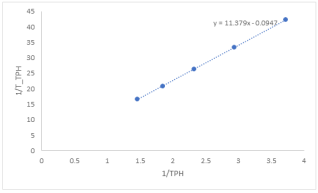
Figure 1. Profile Plot of 1/RTPH Versus 1/TPH.
Figure 1 shows a strong positive linear relationship between the reciprocal TPH concentration (1/TPH) and the reciprocal reaction rate (1/RTPH). The regression equation, y = 11.379x − 0.0947, indicates that the slope is 11.379, while the intercept is −0.0947. The positive slope suggests that the reciprocal reaction rate increases as the reciprocal TPH concentration increases, indicating a reduction in the reaction rate as TPH concentration decreases during treatment. The negative intercept, however, produces physically unrealistic negative kinetic parameter estimates when the reciprocal plot is used to determine the Michaelis-Menten parameters. Therefore, nonlinear regression of the original kinetic equation is recommended to obtain physically meaningful estimates of the half-saturation constant (Ks) and maximum reaction rate (Rmax).
Table 2. Estimation of Michaelis Menten Kinetic Parameters for TPH.

Parameter

Unit

Value

Ks

mg/L

−120.16

Rₘₐₓ

mg/L/day

−10.56

Table 2 presents the estimated Michaelis-Menten kinetic parameters for TPH treatment in bioreactor A4. The estimated values of (Ks) mg/L and (Rmax) mg/L/day are negative, which are physically unrealistic for conventional Michaelis-Menten kinetics. This suggests that the linear regression may not adequately represent the experimental data, possibly due to the variation in reaction rates or limitations of the reciprocal linearization method. Therefore, the parameters should be re-estimated using nonlinear regression of the original Michaelis-Menten equation to obtain physically meaningful positive values.
3.2. Determination of Monod Kinetic Parameters for PAH
Table 3. Determination of the Specific Rate of Reaction for PAH Treatment in Bioreactor A3.

Time (day)

PAH Conc. (mg/l)

RPAH (mg/l/day)

1/PAH (mg/l)-1

1/RPAH (mg/l/day)-1

0

2.780

—

0.359712

—

3

2.440

0.113333

0.409836

8.823529

6

2.142

0.099333

0.466853

10.067114

9

1.880

0.087333

0.531915

11.450382

12

1.650

0.076667

0.606061

13.043478

15

1.449

0.067000

0.690131

14.925373

Table 3 shows a continuous decrease in PAH concentration from 2.780 mg/L on day 0 to 1.449 mg/L on day 15, representing approximately 47.88% removal. The reaction rate decreased from 0.113333 to 0.067000 mg/L/day, indicating a gradual reduction in the rate of PAH removal during treatment. Similarly, the reciprocal concentration increased from 0.359712 to 0.690131 L/mg, while the reciprocal reaction rate increased from 8.823529 to 14.925373 day·L/mg. These trends indicate declining PAH availability over time and provide data for evaluating the reaction kinetics in bioreactor A3.
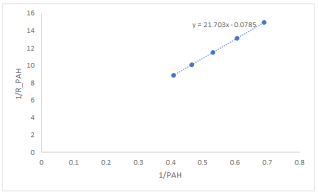
Figure 2. Profile Plot of 1/RPAH Versus 1/PAH.
Figure 2 shows a positive linear relationship between the reciprocal PAH concentration (1/PAH) and the reciprocal reaction rate (1/RPAH). The regression equation, y = 21.703x − 0.0785, indicates a slope of 21.703 and a negative intercept of −0.0785. The positive slope suggests that the reciprocal reaction rate increases as the reciprocal PAH concentration increases, indicating a decline in the reaction rate as PAH concentration decreases during treatment. However, the negative intercept may produce physically unrealistic kinetic parameter estimates when using the linearized Michaelis-Menten model. Therefore, nonlinear regression of the original kinetic equation is recommended to obtain more reliable estimates of the half-saturation constant (Ks) and maximum reaction rate (Rmax).
Table 4. Estimation of Michaelis Menten Kinetic Parameters for PAH.

Parameter

Unit

Value

K

mg/L

−276.442

Rₘₐₓ

mg/L/day

−12.737

Table 4 presents the estimated Michaelis-Menten kinetic parameters for PAH treatment in bioreactor A3. The estimated half-saturation constant and maximum reaction rate are negative, which are physically unrealistic for conventional Michaelis-Menten kinetics. This suggests that the linear regression may not adequately represent the experimental data, potentially due to variations in reaction rates or limitations of the reciprocal linearization method. Therefore, nonlinear regression using the original Michaelis-Menten equation is recommended to obtain physically meaningful positive parameter estimates.
3.3. Determination of Monod Kinetic Parameters for Benzene
Table 5 shows a continuous decrease in benzene concentration from 0.811 mg/L on day 0 to 0.142 mg/L on day 15, representing approximately 82.49% removal. The reaction rate remained relatively constant at approximately 0.051 mg/L/day between days 3 and 12 before decreasing to 0.01867 mg/L/day on day 15. Similarly, the reciprocal benzene concentration increased from 1.2330 to 7.0423 L/mg, while the reciprocal reaction rate increased to 53.5714 day·L/mg at the final sampling time. These results indicate substantial benzene removal during biosparging, although the declining reaction rate toward the end suggests that the removal process slowed as the benzene concentration decreased.
Table 5. Determination of the Specific Rate of Reaction for Benzene Treatment in Bioreactor A5.

Time (day)

Benzene Conc. (mg/l)

R_C6H6 (mg/l/day)

1/ C6H6 (mg/l)-1

1/R_C6H6 (mg/l/day)-1

0

0.811

—

1.2330

—

3

0.658

0.05100

1.5198

19.6078

6

0.505

0.05100

1.9802

19.6078

9

0.351

0.05133

2.8490

19.4805

12

0.198

0.05100

5.0505

19.6078

15

0.142

0.01867

7.0423

53.5714

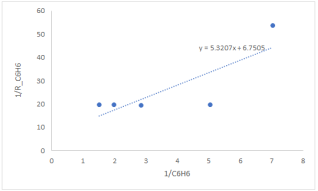
Figure 3. Profile Plot of 1/RC6H6 Versus 1/C6H6.
Figure 3 illustrates the relationship between the reciprocal benzene concentration (1/C6H6) and the reciprocal reaction rate (1/R_C6H6). The regression equation, y = 5.3207x + 6.7505, indicates a positive slope of 5.3207 and a positive intercept of 6.7505. This suggests that the reciprocal reaction rate generally increases as the reciprocal benzene concentration increases, indicating a decline in the reaction rate as benzene concentration decreases during treatment. Unlike the previous plots, the positive intercept permits positive estimates of the Michaelis-Menten kinetic parameters using the linearized equation. However, the scatter of the data points, particularly the final point, suggests that the linear fit may be influenced by an outlier. Therefore, the estimated parameters should be validated using nonlinear regression of the original Michaelis-Menten equation.
Table 6. Estimation of Michaelis Menten Kinetic Parameters for Benzene.

Parameter

Unit

Value

K

mg/L

0.494

Rₘₐₓ

mg/L/day

0.0929

Table 6 presents the estimated Michaelis-Menten kinetic parameters for benzene treatment in bioreactor A5. The half-saturation constant (K) was estimated as 0.494 mg/L, while the maximum reaction rate (Rₘₐₓ) was 0.0929 mg/L/day. These positive values indicate physically plausible kinetic parameters under the Michaelis-Menten model. The relatively low K value suggests that the reaction rate may approach its maximum at comparatively low benzene concentrations. However, the reliability of these estimates should be confirmed by assessing the model fit and comparing the predicted reaction rates with the experimental data.
3.4. Determination of Monod Kinetic Parameters for Toluene
Table 7 shows a continuous decrease in toluene concentration from 0.587 mg/L on day 0 to 0.133 mg/L on day 15, representing approximately 77.34% removal. The reaction rate remained relatively constant at approximately 0.03467 mg/L/day between days 3 and 12 before decreasing to 0.01267 mg/L/day on day 15. The reciprocal concentration increased from 1.7036 to 7.5188 L/mg, while the reciprocal reaction rate rose to 78.9474 day·L/mg at the final sampling time. These results indicate substantial toluene removal during biosparging, with a reduced reaction rate toward the end of the treatment period.
Table 7. Determination of the Specific Rate of Reaction for Toluene Treatment in Bioreactor A5.

Time (day)

Toluene Conc. (mg/l)

R_C7H8 (mg/l/day)

1/ C7H8 (mg/l)-1

1/R_C7H8 (mg/l/day)-1

0

0.587

—

1.7036

—

3

0.483

0.03467

2.0704

28.8462

6

0.379

0.03467

2.6385

28.8462

9

0.275

0.03467

3.6364

28.8462

12

0.171

0.03467

5.8480

28.8462

15

0.133

0.01267

7.5188

78.9474

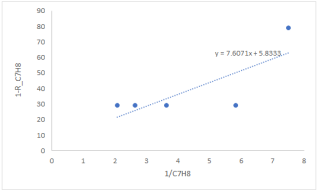
Figure 4. Profile Plot of 1/RC7H8 Versus 1/C7H8.
Figure 4 illustrates the relationship between the reciprocal toluene concentration (1/C7H8) and the reciprocal reaction rate (1/R_C7H8). The regression equation, y = 7.6071x + 5.8333, indicates a positive slope of 7.6071 and a positive intercept of 5.8333. This suggests that the reciprocal reaction rate generally increases as the reciprocal toluene concentration increases, indicating a decline in the reaction rate as toluene concentration decreases during treatment. However, the scatter of the data points, particularly the final point, suggests that the linear fit may be influenced by an outlier. Although the positive intercept permits positive kinetic parameter estimates using the linearized Michaelis-Menten equation, nonlinear regression of the original equation is recommended to validate the estimated parameters.
Table 8. Estimation of Michaelis Menten Kinetic Parameters for Toluene.

Parameter

Unit

Value

K

mg/L

1.30

Rₘₐₓ

mg/L/day

0.171

Table 8 presents the estimated Michaelis-Menten kinetic parameters for toluene treatment in bioreactor A5. The half-saturation constant (K) was estimated at 1.30 mg/L, while the maximum reaction rate (Rₘₐₓ) was 0.171 mg/L/day. These values suggest that the reaction rate reaches half of its maximum at a toluene concentration of 1.30 mg/L. However, the reliability of these parameters should be confirmed by evaluating the model fit against the experimental data, particularly because the estimated maximum rate should be consistent with the observed reaction rates.
3.5. Determination of Monod Kinetic Parameters for Ethylbenzene
Table 9. Determination of the Specific Rate of Reaction for Ethylbenzene Treatment in Bioreactor A5.

Time (day)

Toluene Conc. (mg/l)

R_EB (mg/l/day)

1/ EB (mg/l)-1

1/EB (mg/l/day)-1

0

0.356

—

2.8090

—

3

0.297

0.01967

3.3670

50.8475

6

0.237

0.02000

4.2194

50.0000

9

0.178

0.01967

5.6180

50.8475

12

0.119

0.01967

8.4034

50.8475

15

0.097

0.00733

10.3093

136.3636

Table 9 shows a decrease in ethylbenzene concentration from 0.356 mg/L on day 0 to 0.097 mg/L on day 15, representing approximately 72.75% removal. The reaction rate remained relatively constant at about 0.01967 mg/L/day between days 3 and 12 before declining to 0.00733 mg/L/day on day 15. The reciprocal concentration increased from 2.8090 to 10.3093 L/mg, while the reciprocal reaction rate rose to 136.3636 day·L/mg at the final sampling time. These results indicate substantial ethylbenzene removal during biosparging, although the declining reaction rate toward the end suggests that the removal process slowed as the remaining ethylbenzene concentration decreased.
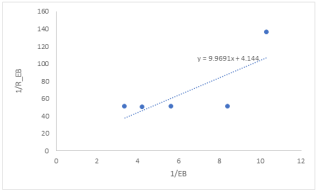
Figure 5. Profile Plot of 1/REB Versus 1/EB.
Figure 5 illustrates the relationship between the reciprocal ethylbenzene concentration (1/EB) and the reciprocal reaction rate (1/R_EB). The regression equation, y = 9.9691x + 4.144, indicates a positive slope of 9.9691 and a positive intercept of 4.144. This suggests that the reciprocal reaction rate generally increases as the reciprocal ethylbenzene concentration increases, indicating a decline in the reaction rate as ethylbenzene concentration decreases during treatment. However, the scatter of the data points, particularly the final point, suggests that the linear fit may be influenced by an outlier. Although the positive intercept permits positive kinetic parameter estimates using the linearized Michaelis-Menten equation, nonlinear regression of the original equation is recommended to validate the estimates and improve their reliability.
Table 10. Estimation of Michaelis Menten Kinetic Parameters for Ethylbenzene.

Parameter

Unit

Value

K

mg/L

2.32

Rₘₐₓ

mg/L/day

0.234

Table 10 presents the estimated Michaelis-Menten kinetic parameters for ethylbenzene treatment in bioreactor A5. The half-saturation constant (K) was estimated as 2.32 mg/L, while the maximum reaction rate (Rₘₐₓ) was 0.234 mg/L/day. These values suggest that the reaction rate reaches half of its maximum at an ethylbenzene concentration of 2.32 mg/L. However, the estimated maximum reaction rate is higher than the observed interval-average reaction rates in Table 8. Therefore, the parameters should be validated against the experimental data to confirm their reliability and suitability for describing ethylbenzene removal during biosparging.
3.6. Determination of Monod Kinetic Parameters for Xylene
Table 11. Determination of the Specific Rate of Reaction for Xylene Treatment in Bioreactor A5.

Time (day)

Xylene Conc. (mg/l)

R_Xylene (mg/l/day)

1/ Xylene (mg/l)-1

1/R_Xylene (mg/l/day)-1

0

0.831

—

1.2034

—

3

0.685

0.04867

1.4599

20.5479

6

0.538

0.04900

1.8587

20.4082

9

0.392

0.04867

2.5510

20.5479

12

0.246

0.04867

4.0650

20.5479

15

0.192

0.01800

5.2083

55.5556

Table 11 shows a decrease in xylene concentration from 0.831 mg/L on day 0 to 0.192 mg/L on day 15, representing approximately 76.90% removal. The reaction rate remained relatively constant at approximately 0.04867 mg/L/day between days 3 and 12 before declining to 0.01800 mg/L/day on day 15. The reciprocal xylene concentration increased from 1.2034 to 5.2083 L/mg, while the reciprocal reaction rate increased to 55.5556 day·L/mg at the final sampling time. These results indicate substantial xylene removal during biosparging, although the declining reaction rate toward the end suggests a slowdown in the removal process as the remaining xylene concentration decreased.
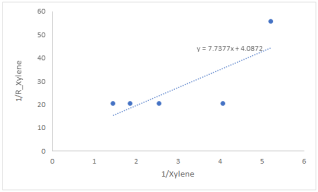
Figure 6. Profile Plot of 1/RXylene Versus 1/Xylene.
Figure 6 illustrates the relationship between the reciprocal xylene concentration (1/Xylene) and the reciprocal reaction rate (1/R_Xylene). The regression equation, y = 7.7377x + 4.0872, indicates a positive slope of 7.7377 and a positive intercept of 4.0872. This suggests that the reciprocal reaction rate generally increases as the reciprocal xylene concentration increases, indicating a reduction in the reaction rate as xylene concentration decreases during treatment. However, the scatter of the data points, particularly the final point, suggests that the linear fit may be influenced by an outlier. Although the positive intercept permits positive estimates of the Michaelis-Menten kinetic parameters, nonlinear regression of the original equation is recommended to validate the estimated half-saturation constant (K) and maximum reaction rate (Rₘₐₓ).
Table 12. Estimation of Michaelis Menten Kinetic Parameters for Xylene.

Parameter

Unit

Value

K

mg/L

1.85

Rₘₐₓ

mg/L/day

0.165

Table 12 presents the estimated Michaelis-Menten kinetic parameters for xylene treatment in bioreactor A5. The half-saturation constant (K) was estimated as 1.85 mg/L, while the maximum reaction rate (Rₘₐₓ) was 0.165 mg/L/day. These values suggest that the reaction rate reaches half of its maximum at a xylene concentration of 1.85 mg/L. However, the estimated maximum reaction rate is higher than the observed interval-average reaction rates in Table 10. Therefore, the parameters should be validated against the experimental data to confirm their reliability in describing xylene removal during biosparging.
4. Conclusion
This study evaluated the removal of petroleum-related contaminants from co-contaminated groundwater using laboratory-scale biosparging and estimated kinetic parameters for TPH, PAH, and BTEX treatment. After 15 days, TPH and PAH removal efficiencies were 69.08% and 47.88%, respectively. The BTEX compounds also showed substantial reductions, with benzene recording the highest removal efficiency at 82.49%, followed by toluene at 77.34%, xylene at 76.90%, and ethylbenzene at 72.75%. These results demonstrate the potential of biosparging to reduce petroleum-related contamination under the experimental conditions.
The estimated maximum reaction rates for benzene, toluene, ethylbenzene, and xylene were 0.0929, 0.171, 0.234, and 0.165 mg/L/day, respectively. However, the negative kinetic parameters obtained for TPH and PAH indicate that the linearized approach did not provide physically meaningful estimates for these contaminants. Furthermore, the scatter observed in the reciprocal plots and the differences between estimated maximum rates and observed reaction rates indicate that the positive estimates also require validation. Nonlinear regression of the original kinetic equation is therefore recommended.
Overall, biosparging demonstrated potential for petroleum-hydrocarbon and BTEX removal, but further studies should validate the kinetic parameters, distinguish biodegradation from physical removal mechanisms such as volatilization, and assess the influence of oxygen availability, nutrients, and heavy-metal inhibition. Since heavy metals cannot be biodegraded, their removal or immobilization should be quantified separately. These additional evaluations will improve the reliability of kinetic predictions and support the optimization of biosparging for groundwater containing multiple contaminant classes.
Abbreviations

TPH

Total Petroleum Hydrocarbons

WHO

World Health Organization

PVC

Polyvinyl Chloride

PAH

Polycyclic Aromatic Hydrocarbons

BTEX

Benzene, Toluene, Ethylbenzene and Xylenes

Author Contributions
Leton Agatha Kabari: Formal Analysis, Methodology, Software
Kenneth Kekpugile Dagde: Conceptualization, Supervision
Emmanuel Odianyegbuehua Ehirim: Data curation, Resources
Patience Nne Ikenyiri: Writing – review & editing
Conflicts of Interest
The authors declare no conflict of interest.
References
[1] Ajiboye, T. O., Oyewo, O. A., & Onwudiwe, D. C. (2021). Simultaneous removal of organics and heavy metals from industrial wastewater: A review. Chemosphere, 262, Article 128379.
[2] Amor, L., Kennes, C., & Veiga, M. C. (2001). Kinetics of inhibition in the biodegradation of monoaromatic hydrocarbons in presence of heavy metals. Bioresource Technology, 78(2), 181-185.
[3] Bekins, B. A., Warren, E., & Godsy, E. M. (1998). A comparison of zero-order, first-order, and Monod biotransformation models. Ground Water, 36(2), 261-268.
[4] Bencsik, D., Wadhawan, T., Házi, F., & Karches, T. (2024). Plant-wide models for optimizing the operation and maintenance of BTEX-contaminated wastewater treatment and reuse. Environments, 11(5), Article 88.
[5] Carvajal, A., Akmirza, I., Navia, D., Pérez, R., Muñoz, R., & Lebrero, R. (2018). Anoxic denitrification of BTEX: Biodegradation kinetics and pollutant interactions. Journal of Environmental Management, 214, 125-136.
[6] Feng, J.-R., & Ni, H.-G. (2024). Effects of heavy metals and metalloids on the biodegradation of organic contaminants. Environmental Research, 246, Article 118069.
[7] Farhadian, M., Vachelard, C., Duchez, D., & Larroche, C. (2008). In situ bioremediation of monoaromatic pollutants in groundwater: A review. Bioresource Technology, 99(13), 5296-5308.
[8] Goudar, C. T., & Strevett, K. A. (2000). Estimating in-situ Monod biodegradation parameters using a novel explicit solution of a one-dimensional contaminant transport equation. Ground Water, 38(6), 894-898.
[9] Hashim, M. A., Mukhopadhyay, S., Sahu, J. N., & Sengupta, B. (2011). Remediation technologies for heavy metal contaminated groundwater. Journal of Environmental Management, 92(10), 2355-2388.
[10] Kao, C. M., Chen, C. Y., Chen, S. C., Chien, H. Y., & Chen, Y. L. (2008). Application of in situ biosparging to remediate a petroleum-hydrocarbon spill site: Field and microbial evaluation. Chemosphere, 70(8), 1492-1499.
[11] Kelly, W. R., Hornberger, G. M., Herman, J. S., & Mills, A. L. (1996). Kinetics of BTX biodegradation and mineralization in batch and column systems. Journal of Contaminant Hydrology, 23(1-2), 113-132.
[12] Ławniczak, Ł., Woźniak-Karczewska, M., Loibner, A. P., Heipieper, H. J., & Chrzanowski, Ł. (2020). Microbial degradation of hydrocarbons—Basic principles for bioremediation: A review. Molecules, 25(4), Article 856.
[13] Liu, S., Guo, L., Xiang, C., Zhu, B., Huang, W., Tian, L., Tang, J., Dai, Z., Filimonenko, E., Mekhalif, R., Jia, H., & Kuzyakov, Y. (2025). Factors of microbial degradation of organic pollutants: Two meta-analyses. Journal of Cleaner Production, 486, Article 144459.
[14] Monod, J. (1949). The growth of bacterial cultures. Annual Review of Microbiology, 3, 371-394.
[15] Qasem, N. A. A., Mohammed, R. H., & Lawal, D. U. (2021). Removal of heavy metal ions from wastewater: A comprehensive and critical review. npj Clean Water, 4, Article 36.
[16] Sun, J., Shi, S., Xie, S., Wang, X., Qu, J., Liu, F., Liu, C., & Zhao, C. (2024). Biodegradation kinetics of petroleum hydrocarbons by composite microbial agents combined with slow release agents in groundwater. Journal of Water Process Engineering, 68, Article 106327.
[17] Tufail, M. A., Iltaf, J., Zaheer, T., Tariq, L., Amir, M. B., Fatima, R., Asbat, A., Kabeer, T., Fahad, M., Naeem, H., Shoukat, U., Noor, H., Awais, M., Umar, W., & Ayyub, M. (2022). Recent advances in bioremediation of heavy metals and persistent organic pollutants: A review. Science of the Total Environment, 850, Article 157961.
[18] Trigueros, D. E. G., Módenes, A. N., Kroumov, A. D., & Espinoza-Quiñones, F. R. (2010). Modeling of biodegradation process of BTEX compounds: Kinetic parameters estimation by using particle swarm global optimizer. Process Biochemistry, 45(8), 1355-1361.
[19] Upadhyay, S. K., Rani, N., Kumar, V., Mythili, R., & Jain, D. (2023). A review on simultaneous heavy metal removal and organo-contaminants degradation by potential microbes: Current findings and future outlook. Microbiological Research, 273, Article 127419.
[20] Wang, M., Jiang, D., Yang, L., Wei, J., Kong, L., Xie, W., Ding, D., Fan, T., & Deng, S. (2024). Natural attenuation of BTEX and chlorobenzenes in a formerly contaminated pesticide site in China: Examining kinetics, mechanisms, and isotopes analysis. Science of the Total Environment, 918, Article 170506.
[21] Yuan, L., Wang, K., Zhao, Q., Yang, L., Wang, G., Jiang, M., & Li, L. (2024). An overview of in situ remediation for groundwater co-contaminated with heavy metals and petroleum hydrocarbons. Journal of Environmental Management, 349, Article 119342.
Cite This Article
  • APA Style

    Kabari, L. A., Dagde, K. K., Ehirim, E. O., Ikenyiri, P. N. (2026). Determination of Monod Kinetic Parameters for Petroleum Hydrocarbon, Heavy Metals and BTEX Co-Contaminated Groundwater During Biosparging. American Journal of Chemical Engineering, 14(6), 195-204. https://doi.org/10.11648/j.ajche.20261406.11

    Copy | Download

    ACS Style

    Kabari, L. A.; Dagde, K. K.; Ehirim, E. O.; Ikenyiri, P. N. Determination of Monod Kinetic Parameters for Petroleum Hydrocarbon, Heavy Metals and BTEX Co-Contaminated Groundwater During Biosparging. Am. J. Chem. Eng. 2026, 14(6), 195-204. doi: 10.11648/j.ajche.20261406.11

    Copy | Download

    AMA Style

    Kabari LA, Dagde KK, Ehirim EO, Ikenyiri PN. Determination of Monod Kinetic Parameters for Petroleum Hydrocarbon, Heavy Metals and BTEX Co-Contaminated Groundwater During Biosparging. Am J Chem Eng. 2026;14(6):195-204. doi: 10.11648/j.ajche.20261406.11

    Copy | Download

  • @article{10.11648/j.ajche.20261406.11,
      author = {Leton Agatha Kabari and Kenneth Kekpugile Dagde and Emmanuel Odianyegbuehua Ehirim and Patience Nne Ikenyiri},
      title = {Determination of Monod Kinetic Parameters for Petroleum Hydrocarbon, Heavy Metals and BTEX Co-Contaminated Groundwater During Biosparging},
      journal = {American Journal of Chemical Engineering},
      volume = {14},
      number = {6},
      pages = {195-204},
      doi = {10.11648/j.ajche.20261406.11},
      url = {https://doi.org/10.11648/j.ajche.20261406.11},
      eprint = {https://article.sciencepublishinggroup.com/pdf/10.11648.j.ajche.20261406.11},
      abstract = {This study investigated the determination of kinetic parameters for the treatment of groundwater co-contaminated with total petroleum hydrocarbons (TPH), polycyclic aromatic hydrocarbons (PAHs), heavy metals, and benzene, toluene, ethylbenzene, and xylenes (BTEX) using laboratory-scale biosparging. The experimental setup consisted of five bioreactors designed for pH adjustment, heavy-metal treatment, PAH removal, TPH removal, and BTEX treatment. Contaminant concentrations were monitored over 15 days, and the specific reaction rates and reciprocal concentration relationships were evaluated using linearized Michaelis-Menten kinetics. The results showed that TPH concentration decreased from 0.870 to 0.269 mg/L, corresponding to 69.08% removal, while PAH concentration decreased from 2.780 to 1.449 mg/L, representing 47.88% removal. For BTEX, benzene, toluene, ethylbenzene, and xylene removal efficiencies were 82.49%, 77.34%, 72.75%, and 76.90%, respectively. The estimated maximum reaction rates (Rₘₐₓ) were 0.0929, 0.171, 0.234, and 0.165 mg/L/day for benzene, toluene, ethylbenzene, and xylene, respectively. However, the linearized kinetic estimates for TPH and PAH produced negative parameters, indicating limitations in the linear regression approach. The findings demonstrate the potential of biosparging for reducing petroleum-related contaminants in groundwater, although nonlinear regression and further validation are required to improve the reliability of the kinetic parameters. Heavy-metal reduction should be evaluated separately because metals cannot be biodegraded. The study provides a basis for improving kinetic modelling and optimizing biosparging treatment for co-contaminated groundwater.},
     year = {2026}
    }
    

    Copy | Download

  • TY  - JOUR
    T1  - Determination of Monod Kinetic Parameters for Petroleum Hydrocarbon, Heavy Metals and BTEX Co-Contaminated Groundwater During Biosparging
    AU  - Leton Agatha Kabari
    AU  - Kenneth Kekpugile Dagde
    AU  - Emmanuel Odianyegbuehua Ehirim
    AU  - Patience Nne Ikenyiri
    Y1  - 2026/11/11
    PY  - 2026
    N1  - https://doi.org/10.11648/j.ajche.20261406.11
    DO  - 10.11648/j.ajche.20261406.11
    T2  - American Journal of Chemical Engineering
    JF  - American Journal of Chemical Engineering
    JO  - American Journal of Chemical Engineering
    SP  - 195
    EP  - 204
    PB  - Science Publishing Group
    SN  - 2330-8613
    UR  - https://doi.org/10.11648/j.ajche.20261406.11
    AB  - This study investigated the determination of kinetic parameters for the treatment of groundwater co-contaminated with total petroleum hydrocarbons (TPH), polycyclic aromatic hydrocarbons (PAHs), heavy metals, and benzene, toluene, ethylbenzene, and xylenes (BTEX) using laboratory-scale biosparging. The experimental setup consisted of five bioreactors designed for pH adjustment, heavy-metal treatment, PAH removal, TPH removal, and BTEX treatment. Contaminant concentrations were monitored over 15 days, and the specific reaction rates and reciprocal concentration relationships were evaluated using linearized Michaelis-Menten kinetics. The results showed that TPH concentration decreased from 0.870 to 0.269 mg/L, corresponding to 69.08% removal, while PAH concentration decreased from 2.780 to 1.449 mg/L, representing 47.88% removal. For BTEX, benzene, toluene, ethylbenzene, and xylene removal efficiencies were 82.49%, 77.34%, 72.75%, and 76.90%, respectively. The estimated maximum reaction rates (Rₘₐₓ) were 0.0929, 0.171, 0.234, and 0.165 mg/L/day for benzene, toluene, ethylbenzene, and xylene, respectively. However, the linearized kinetic estimates for TPH and PAH produced negative parameters, indicating limitations in the linear regression approach. The findings demonstrate the potential of biosparging for reducing petroleum-related contaminants in groundwater, although nonlinear regression and further validation are required to improve the reliability of the kinetic parameters. Heavy-metal reduction should be evaluated separately because metals cannot be biodegraded. The study provides a basis for improving kinetic modelling and optimizing biosparging treatment for co-contaminated groundwater.
    VL  - 14
    IS  - 6
    ER  - 

    Copy | Download

Author Information
  • Department of Chemical/Petrochemical Engineering, Rivers State University, Port Harcourt, Nigeria

  • Department of Chemical/Petrochemical Engineering, Rivers State University, Port Harcourt, Nigeria

  • Department of Chemical/Petrochemical Engineering, Rivers State University, Port Harcourt, Nigeria

  • Department of Chemical/Petrochemical Engineering, Rivers State University, Port Harcourt, Nigeria

  • Abstract
  • Keywords
  • Document Sections

    1. 1. Introduction
    2. 2. Materials and Methods
    3. 3. Results and Discussion
    4. 4. Conclusion
    Show Full Outline
  • Abbreviations
  • Author Contributions
  • Conflicts of Interest
  • References
  • Cite This Article
  • Author Information